Introduction
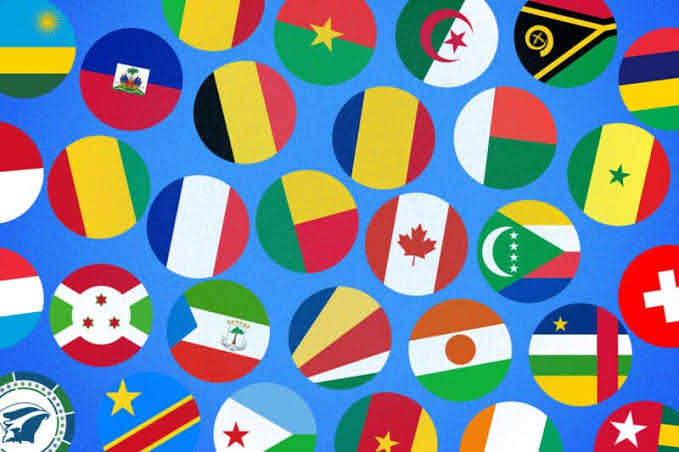
If you look at a modern linguistic map, you will find that French is not confined to the European continent. It is an official language across twenty-nine sovereign nations, spanning Europe, Africa, North America, and various island groups across the Pacific and Indian Oceans. Today, over 300 million people speak French globally, and according to demographic projections, that number could rise to 700 million by 2050.
How did a language that began as a regional dialect in northern France transform into an absolute cornerstone of global administration, commerce, and culture? This massive global footprint was built in three distinct historical phases: cultural soft power, aggressive territorial imperialism, and the modern post-colonial demographic surge.
Click here to become a fluent French speaker in record time
Phase 1: The Language of European Elites (17th–18th Century)
Long before France established vast global territories, its language became the undisputed currency of international high society, diplomacy, and intellect.
During the reign of Louis XIV, France stood as the dominant land power in Europe. The prestige of the royal court at Versailles turned French culture into the gold standard for European aristocracy.
- The Diplomatic Standard: If you were a Russian nobleman, a Prussian prince, or a British diplomat in the 18th century, you did not use English or German to conduct cross-border treaties; you spoke French. It completely replaced Latin as the universal language of international relations.
- The Enlightenment Core: The most influential philosophers and scientists of the era,such as Voltaire, Rousseau, and Descartes,wrote their treatises in French. This solidified the language as the primary vehicle for scientific, philosophical, and political progress across the globe.
Phase 2: The Two Waves of Imperial Expansion
The primary mechanism behind the physical spread of French across the globe was colonial conquest, which occurred in two distinct historical chapters.
The First Colonial Empire (16th–18th Century)
French explorers focused their initial efforts on North America and the Caribbean, establishing vast fur-trading networks and sugar plantations:
- New France: Territories stretched from eastern Canada (Quebec) down the Mississippi River basin to Louisiana. While France eventually lost these territories to Great Britain and the United States, the linguistic anchor remained ironclad in Quebec, where over 6 million people still speak French as their first language today.
- The Caribbean: Strategic outposts like Saint-Domingue (now Haiti) adopted French and developed local French-based creoles due to the intensive plantation economy.
The Second Colonial Empire (19th–20th Century)
Following the collapse of its American holdings, France shifted its imperial focus toward Africa, Southeast Asia, and the Pacific. This era permanently altered the linguistic map of the world:
- The Scramble for Africa: France seized massive territories across North, West, and Central Africa,including modern-day Senegal, Ivory Coast, Mali, Guinea, Cameroon, and Madagascar.
- The System of Assimilation: Unlike British colonial administrators, who frequently ruled indirectly and left local languages intact for daily governance, the French state deployed a policy of total cultural assimilation. They built centralized school systems where local languages were strictly banned, and French was enforced as the sole legal medium for education, law, and corporate commerce.
Phase 3: The Modern African Demographic Surge
When the wave of decolonization swept across the world in the mid-20th century, many newly independent nations chose to retain French as their official language.
This was not out of nostalgia for the colonial state; it was a highly pragmatic, tactical decision. In nations like the Ivory Coast, Cameroon, or the Democratic Republic of the Congo, the population was split across dozens of distinct ethnic groups, each speaking its own regional language. Retaining French provided a politically neutral framework that prevented ethnic favoritism and allowed the new government to conduct immediate unified administration, legal enforcement, and international trade.
The Year of Africa (1960)
Seventeen African nations gain independence from France. The vast majority retain French as an official administrative language to maintain institutional stability..
Founding of the OIF (1970)
The Organisation Internationale de la Francophonie is established. This global institutional framework unites French-speaking nations to promote cultural, economic, and educational collaboration.
Today, this choice has completely shifted the geographic center of gravity for the language. Europe is no longer the primary home of French. More than half of all daily French speakers now live on the African continent. Because of rapid population growth in urban hubs like Kinshasa (the capital of the Democratic Republic of the Congo, which is now the largest French-speaking city in the world, eclipsing Paris), Africa is driving the future growth of the language globally.
Conclusion
The global reach of the French language is an intricate story of elite culture, brutal imperial coercion, and modern administrative utility. It began as a prestigious tongue spoken in the courts of European kings, was carried across oceans by naval forces and colonial administrators, and is now being reinvented and scaled by vibrant economic hubs across Africa. Understanding this historical arc explains why a language born on the banks of the Seine is today an essential tool for navigating global commerce and international diplomacy.
Click here to become a fluent French speaker in record time
Read Our Recent Posts

Speak French In 3 Months
SpeakFrenchFast Academy
All Rights Reserved.