Introduction
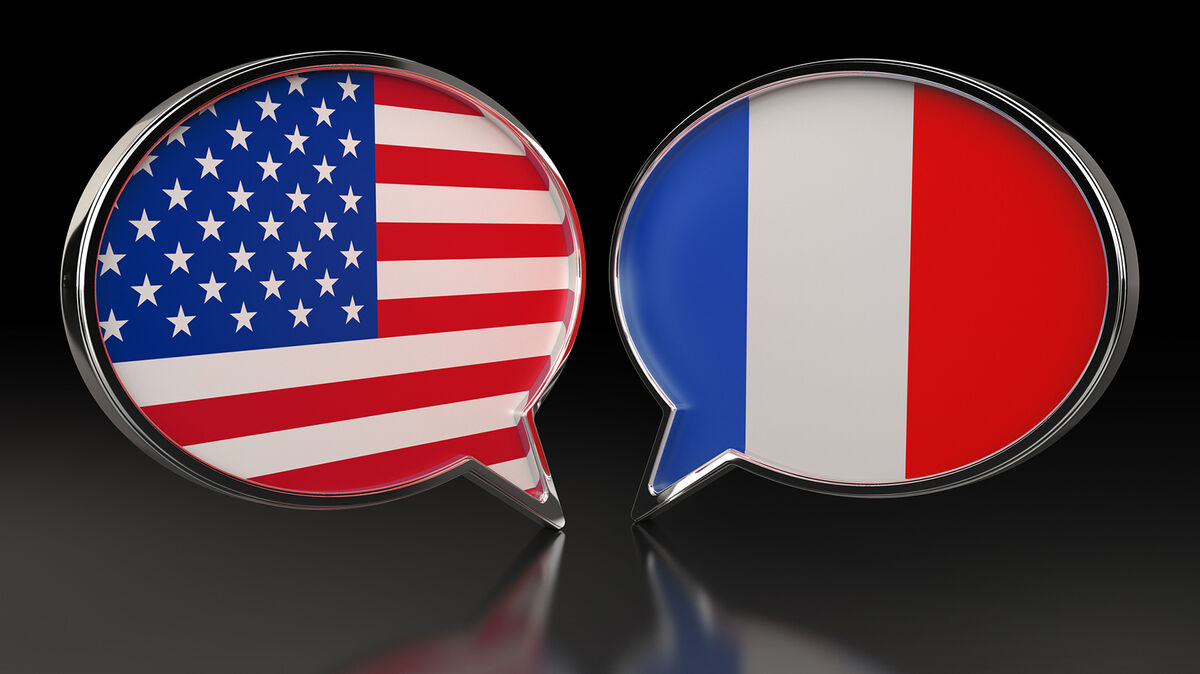
In our digital global economy, languages trade vocabulary constantly. If you read a modern French corporate update, a marketing funnel proposal, or a casual text message stream, you will notice a massive influx of English words. Linguists call these anglicisms,words imported directly from English into daily French speech.
For an English speaker, seeing these familiar words looks like a massive shortcut. You assume you instantly know what they mean. But beware: French speakers frequently borrow an English word and completely distort its meaning, usage, or grammatical part of speech. In linguistics, these are known as false friends (faux amis). If you deploy these words using their original English definitions in a conversation or an email pitch, you will cause immediate confusion. To protect your communication from messy misunderstandings, you must decode how these twenty-five borrowed words actually function in French.
Click here to become a fluent French speaker in record time
The Corporate and Professional Shifts
These are the borrowed words used constantly across offices, agencies, and digital platforms that have shifted their semantic tracks.
- Le Planning: In English, planning is the ongoing abstract verb process of organizing a project. In French, le planning is a concrete noun that specifically means a physical schedule, calendar, or timetable. If a colleague asks for the planning, they want the visual timeline grid, not a strategic brainstorming session.
- Le Briefing: While English uses this to describe an informational meeting, French uses le briefing to refer to the formal instruction document or project brief given to a creative or contractor before a build.
- Les Baskets: You might think this refers to laundry bins or basketball hoops. In French, les baskets refers exclusively to sneakers, trainers, or running shoes.
- Le Replay: In English, replay is a verb or an instant-sports visual check. In French, it is a noun that specifically refers to video-on-demand or catch-up TV streaming services.
Casual and Social Media Distortions
When you hang out with native speakers or scroll through lifestyle content, you will encounter words that sound entirely English but carry bizarre local definitions.
- Le Smoking: This does not refer to a tobacco habit or a designated area outside a bar. In French, le smoking means a tuxedo or dinner jacket.
- Le Brushing: If a French speaker tells you they are going to get a brushing, they aren’t just tidying their hair. It means a professional salon blowout.
- Le Footing: This has absolutely nothing to do with finding stable ground or measuring foundations. In French, le footing means going for a jog or a steady run.
- Un Match: While it can mean a sports game, in modern digital circles, it is used as a verb (matcher) to mean to fit together or look visually compatible, heavily influenced by dating app interfaces.
The Ultimate Borrowed Word Decoder Matrix
Use this direct reference table to see exactly how these twenty-five high-frequency words shift when they cross the border:
| Borrowed Word | What It Means in English | What It Actually Means in French |
| 1. Le planning | The act of formulating a plan | A physical schedule or timetable |
| 2. Le smoking | Inhaling tobacco smoke | A tuxedo / dinner jacket |
| 3. Les baskets | Nets used in basketball | Sneakers / athletic shoes |
| 4. Le footing | Secure placement for your feet | A light jog or running exercise |
| 5. Le brushing | Sweeping a surface with a brush | A hair blowout at a salon |
| 6. Le relooking | Redoing a specific visual asset | A personal fashion makeover |
| 7. Le catch | Grasping an object in mid-air | Professional pro-wrestling |
| 8. Un forcing | Compelling an action | A high-pressure push or effort |
| 9. Le standing | Your rank or position | High-end luxury or prestige |
| 10. Le tennis | The sport played with rackets | Can refer to the sport OR sneakers |
| 11. Le zapping | Destroying something instantly | Channel-surfing on a television |
| 12. Le dressing | Sauce for a salad | A walk-in closet or wardrobe |
| 13. Un coach | A person training an athlete | A personal consultant or tutor |
| 14. Le talkie-walkie | A two-way radio device | Same device, but the words are reversed |
| 15. Le pressing | Applying physical pressure | The dry cleaner / dry cleaning shop |
| 16. Le pull | Act of tugging an item | A pullover sweater |
| 17. Le record | A stored documentation file | A sports or performance world record |
| 18. Le klaxon | An old-school brand of horn | Any vehicle horn / the act of honking |
| 19. Un bouncer | Security at a venue entrance | Used casually as le videur, but le bouncer is un-native |
| 20. Le pin’s | Sharp metal fasteners | A decorative lapel pin badge |
| 21. Le warning | An advance hazard notice | Hazard lights on a car dashboard |
| 22. Le speaker | An audio output device | A stadium announcer or news anchor |
| 23. Le string | A thin piece of cord or rope | A G-string or thong undergarment |
| 24. Le baby-foot | A literal infant’s foot | The tabletop game of Foosball |
| 25. Le parking | The abstract act of leaving a car | A physical parking lot or garage |
Conclusion
Linguistic borrowing is highly efficient, but it creates hidden landmines for language learners who assume familiarity equals accuracy. If you tell a French client you are reviewing the dressing of your campaign when you mean its presentation style, or ask for a pressing when you mean high-pressure execution, you will derail the conversation. Learn these twenty-five variations, treat every anglicism with a healthy dose of structural suspicion, and communicate with absolute precision.
Click here to become a fluent French speaker in record time
Read Our Recent Posts
Speak French In 3 Months
SpeakFrenchFast Academy
All Rights Reserved.