Introduction
If you have ever tried to explain a specific feeling or situation in English, only to realize there isn’t a clean, single word for it, you know how frustrating language barriers can be. English is vast, but French has a unique knack for packing entire emotional states, cultural habits, and complex social interactions into single, highly efficient words.
These aren’t just vocabulary items—they are cultural windows. When you learn these words, you stop translating word-for-word and start thinking with the exact nuance and rhythm of a native speaker. Here are twelve essential French words that have no direct, single-word translation in English, along with how to deploy them in daily life.
Click here to become a fluent French speaker in record time.
1. Flâner
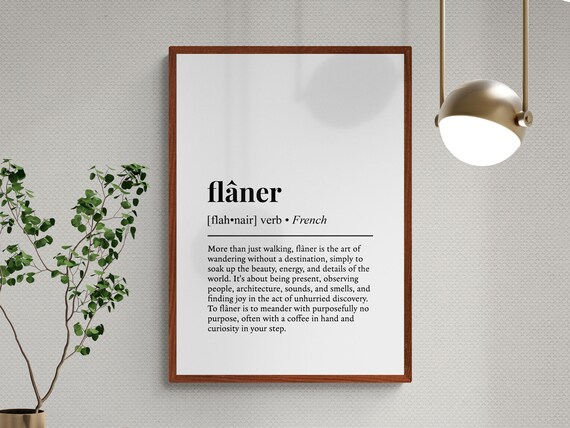
The literal meaning of this verb translates to strolling or wandering, but its deeper cultural resonance is far richer. Flâner isn’t just walking to get somewhere; it is the art of aimlessly wandering through a city with no fixed destination, no timetable, and no specific goal other than taking in the atmosphere. It was elevated to a cultural ideal by 19th-century French poets who viewed observing city life as a form of art. You can use it in conversation by saying, “Dimanche après-midi, j’ai passé trois heures à flâner dans les rues de Paris” (On Sunday afternoon, I spent three hours aimlessly wandering the streets of Paris).
2. Retrouvailles
While English has terms like “reunion,” retrouvailles captures a far warmer, deeply emotional nuance. Literally translating to “re-findings,” it specifically refers to the joy of reuniting with someone you care about after a long period of separation—that exact moment when you reconnect and feel the lapse in time vanish. A typical usage would be, “Après deux ans de séparation, leurs retrouvailles à l’aéroport étaient magnifiques” (After two years apart, their emotional reunion at the airport was beautiful).
3. Dépaysement
Literally meaning “un-country-ing,” this word describes that sudden, sensory realization that you are completely out of your home environment. It can describe the exhilarating feeling of being in a foreign land with new sights, smells, and sounds, or the subtle disorientation of being completely out of your element. In a sentence, you might say, “Voyager dans ce petit village de montagne m’a provoqué un véritable dépaysement” (Traveling to this small mountain village gave me a total change of scenery and sense of displacement).
4. L’esprit de l’escalier
Coined by the philosopher Denis Diderot, this phrase translates literally to “staircase wit.” It describes the precise frustration of thinking of the perfect witty comeback or argument only after you have left the room and are walking down the stairs. You can use it when reflecting on a missed opportunity: “J’ai encore eu l’esprit de l’escalier ! J’aurais dû lui répondre ça pendant la réunion” (I had staircase wit again! I should have said that back to him during the meeting).
5. Flou
While flou literally translates to “blurry” when referring to photos or vision, French speakers use it extensively to describe abstract situations, legal gray areas, unwritten plans, or emotional uncertainty where boundaries aren’t clearly defined. When facing an ambiguous setup at work, you can state, “Les consignes du projet sont encore un peu floues” (The project guidelines are still a bit vague or unclear).
6. Cartésien
In English, “Cartesian” is a technical term used mainly in mathematics or philosophy. In French, calling someone cartésien is a standard everyday compliment or personality description. Originating from René Descartes, it describes someone who has a logical, methodical, analytical mind grounded strictly in clear reasoning. A practical example is, “C’est un esprit très cartésien, il va analyser la situation méthodiquement” (He has a very logical and analytical mind; he will analyze the situation methodically).
7. Ras-le-bol
Translating literally to “a bowl full of it,” this phrase is deployed when you have reached your absolute limit with a situation, job, or system. Expressing le ras-le-bol encapsulates the total physical and mental fatigue of saying you have had it up to here. For instance, you might declare, “J’ai un vrai ras-le-bol de ces retards de train répétés !” (I am completely fed up with these repeated train delays!).
8. Terroir
Much more than its literal translation of earth or soil, terroir is a foundational concept in French gastronomy. It describes how the specific combination of soil, microclimate, altitude, terrain, and traditional regional craft gives a wine, cheese, or produce item its distinct identity. A food enthusiast might note, “Ce fromage a du caractère, il reflète parfaitement son terroir” (This cheese has character; it perfectly reflects its local region and heritage).
9. Nostalgie du pays
While English relies on the word “homesickness,” nostalgie du pays carries a more poetic weight. It is not just missing a physical house or routine, but an aching nostalgia for the atmosphere, culture, landscapes, and cadence of your native land when living abroad. You can express this feeling by saying, “Après six mois à l’étranger, la nostalgie du pays commence à se faire sentir” (After six months abroad, homesickness for my native country is starting to set in).
10. Solliciter
In English, “solicit” often carries negative or rigid legal connotations. In French professional life, solliciter is an elegant, polite workhorse verb meaning to reach out to someone for their expertise, advice, or formal approval. It is an ideal opener for corporate outreach: “Je me permets de vous solliciter pour obtenir votre avis sur le rapport” (I am taking the liberty of reaching out to request your feedback on the report).
11. Épanouissement
Literally referring to the unfolding or blooming of a flower, épanouissement is used to describe human psychological growth and fulfillment. It is that state of feeling complete, balanced, and fully realized in your career or personal life. For example, you can say, “Elle a trouvé son épanouissement professionnel dans sa nouvelle entreprise” (She found complete professional fulfillment in her new company).
12. Nuit blanche
While English uses “all-nighter,” une nuit blanche translates literally to a “white night.” It describes a night spent entirely without sleep, whether due to studying, working, traveling, or celebrating. A typical workplace usage would be, “J’ai fait une nuit blanche pour terminer la présentation avant 8 heures” (I pulled an all-nighter to finish the presentation before 8 AM).
Conclusion
Relying on literal English equivalents will always bottleneck your fluency because languages do not map onto one another in neat grids. By adopting concepts like flâner, dépaysement, and épanouissement, you strip away the rigid translation delay and begin to process experiences through a genuinely native lens.
Click here to become a fluent French speaker in record time.
Read Our Recent Posts
Speak French In 3 Months
SpeakFrenchFast Academy
All Rights Reserved.