Introduction
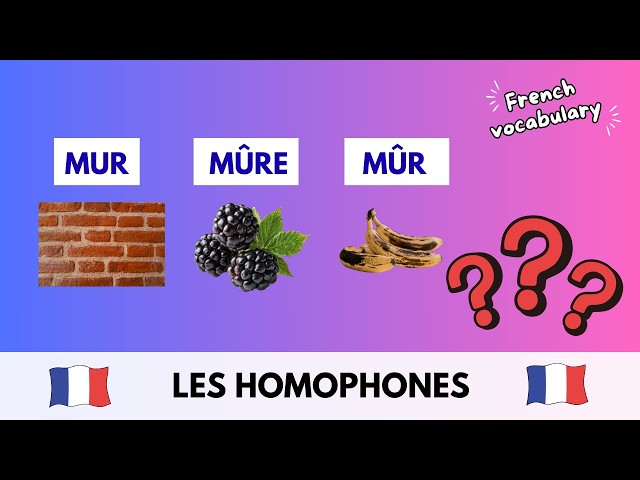
French has a famous reputation for sounding smooth and musical, but that same silky flow can cause huge headaches for learners. Because French drops many final consonants and uses silent letters, completely different words often sound identical to the ear. These twin-sounding words are called homophones.
When you read them on paper, their spellings look totally distinct. But the moment someone says them aloud, your brain has to work out which meaning makes sense. Knowing how to spot common French homophones will save you from funny misunderstandings, build your listening confidence, and help you follow conversations without getting lost.
Click here to become a fluent French speaker in as little as 3 months time.
1. The Famous Green Worm Heading to the Glass: Ver, Vers, Vert, and Verre
The most notorious example of French sound twins is the group made of ver, vers, vert, and verre. Every single one of these four words is pronounced exactly the same way, sounding like the English word “vair.” Yet their definitions could not be further apart.
A ver is a small crawling worm in the soil. The word vers functions as a directional preposition meaning toward, or as a noun referring to a line of poetry. The word vert is the color green. Finally, un verre is a drinking glass, or the material glass itself. A popular French tongue-twister strings them all into one wild sentence: Un ver vert va vers un verre vert, which means a green worm goes toward a green glass. To know which word a speaker means, you simply rely on the rest of the sentence. If someone is drinking juice, they are holding a verre, not a crawling ver.
2. Blood, Without, One Hundred, and Feeling: Sang, Sans, Cent, and Sent
Another classic sound cluster revolves around the nasal sound “sahn.” This single sound represents four everyday words: sang, sans, cent, and sent.
The noun le sang means blood. The tiny preposition sans means without, as in ordering your morning coffee sans sucre (without sugar). The number cent represents one hundred, which you hear constantly when asking about prices. Lastly, sent comes straight from the verb sentir, meaning he or she smells or feels. If a native speaker says Il a cent euros, the context of money makes it clear they mean one hundred, not blood or without.
3. Sea, Mother, and Mayor: Mer, Mère, and Maire
This trio trips up beginners all the time because these words show up in regular, daily chats. All three share the exact sound “mair,” matching the rhythm of the English word “mare.”
The noun la mer refers to the ocean or sea, a favorite topic during holiday seasons when everyone heads to the beach. On the other hand, la mère is the standard word for mother. To round out the trio, le maire is the elected mayor of a town or city. Grammatical gender often gives you a fast clue here: if someone mentions le maire, the masculine article immediately rules out both the sea and mother, pointing you straight to the town official.
4. Voice, Path, and Seeing: Voix, Voie, and Voit
When you hear the sound “vwah,” your mind has three common options to choose from: voix, voie, and voit.
The noun la voix means the human voice. The noun la voie refers to a track, lane, or path, which you will hear constantly at French train stations when announcements call out voie A or voie B. The third twin, voit, is simply the third-person form of the verb voir, meaning he or she sees. Hearing J’entends une voix clearly means hearing a voice, while standing on a railway platform points your attention right to the train track.
5. Count, Tale, and Account: Comte, Conte, and Compte
All three of these words sound identical, making a round nasal sound like “kohnt.” They are spelled with different historical letters, but your ears cannot see the silent letters p or m.
A comte is a noble title meaning a count. A conte is a short story or fairy tale, such as un conte de fées. The third word, compte, comes from banking and arithmetic, meaning an account or a total count, as in un compte bancaire. Because fairy tales and bank accounts rarely mix in daily life, the surrounding situation tells you right away whether you are dealing with money or storybooks.
6. How to Catch the Right Word Without Panic
When homophones pop up in conversation, the biggest mistake is freezing your brain to analyze individual letters. Remember that native speakers do not hear letters; they hear ideas.
Always look at the words standing next to the homophone. Grammatical clues like articles (un, une, le, la) narrow down the gender and tell you if the word is a noun. Prepositions and verbs around the sound paint the real picture. If you hear Il nage dans la…, your brain can instantly predict mer (sea) because nobody swims inside a mayor or a mother. Train yourself to look at the whole sentence, and homophones will stop feeling like traps.
Conclusion
French homophones can feel like tricky verbal riddles at first, but they are simply a normal part of the language’s natural rhythm. By recognizing common sound twins like verre and vert, or mer and mère, you stop guessing in the dark. Lean on the context, listen to the words around them, and you will navigate these matching sounds with complete ease.
Click here to become a fluent French speaker in as little as 3 months time.
Read Our Recent Posts

Speak French In 3 Months
SpeakFrenchFast Academy
All Rights Reserved.