Introduction
In almost every beginner French classroom, students are taught a very formal, structured formula for asking questions. You learn to place est-ce que at the beginning of a sentence, or you are drilled on flipping the subject and verb upside down with a hyphen, turning tu parles into parles-tu. You spend hours practicing these rules until you can produce them cleanly on paper.
Then you travel to France, sit down at a neighborhood café, and listen to how real people actually ask questions. You quickly realize that almost nobody uses subject-verb inversion in daily chat, and question words seem to jump to the very end of the sentence. Understanding why native speakers ask questions so differently from your textbook will help you decode fast conversations and make your own questions sound relaxed, modern, and natural.
Click here to become a fluent French speaker in 3 months or less
1. Why Subject-Verb Inversion Vanished From Casual Speech
In traditional grammar books, subject-verb inversion is presented as the gold standard of French questions. Turning vous avez into avez-vous looks neat and classical in print. However, in real-life spoken French, inversion sounds remarkably formal, literary, or stiff.
If you walk into a casual bakery and ask Avez-vous une baguette ?, the baker will understand you completely, but your tone will sound like you are reading from a nineteenth-century etiquette manual. Furthermore, inversion creates awkward pronunciation hurdles, forcing speakers to insert extra connecting letters like the letter t in parle-t-il just to keep vowels from colliding. Because spoken French prioritizes speed and vocal ease, native speakers save inversion almost exclusively for formal writing, business emails, and polite customer service.
2. The Power of Rising Intonation
The absolute most common way native French speakers ask a yes-or-no question in daily life requires zero grammar changes at all. Instead of rearranging words or adding introductory particles, speakers simply say a normal statement and raise the musical pitch of their voice at the very end.
If a friend wants to know if you are coming to a party tonight, they will not ask Viens-tu ce soir ? or Est-ce que tu viens ce soir ?. They will simply say Tu viens ce soir ? with an upward lift on the final word. Your ear catches the musical rise, and your brain instantly knows it is a question. This simple habit removes all grammatical friction and keeps everyday exchanges fast, warm, and conversational.
3. Question Words Jump to the End of the Sentence
When native speakers use specific question words like où (where), quand (when), comment (how), or pourquoi (why), they rarely follow the formal textbook order. In standard classroom French, you learn to put the question word up front, saying Où vas-tu ? or Quand arrives-tu ?.
In everyday spoken French, native speakers love to keep the subject and verb at the beginning of the sentence and drop the question word right at the very end. A friend will ask Tu vas où ? (You are going where?) instead of Où vas-tu ?. A coworker will ask Tu arrives quand ? (You arrive when?) or Ça coûte combien ? (That costs how much?). Putting the core action first gives the listener immediate context before asking for the missing detail.
4. Where “Est-ce que” Actually Fits In
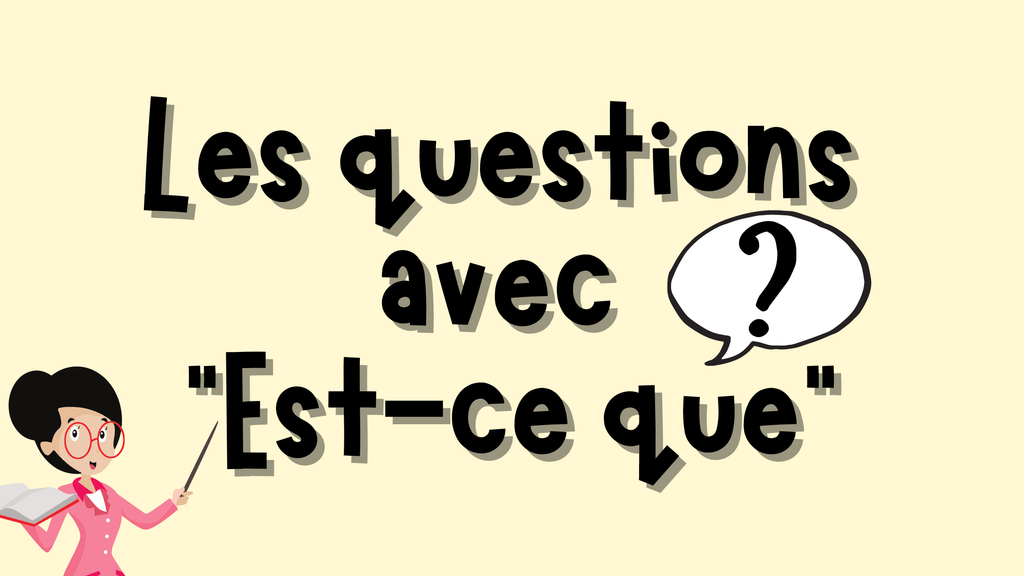
Since inversion is too formal and rising intonation is very casual, where does the classic classroom phrase est-ce que belong? In real life, est-ce que serves as the versatile middle ground of French questions.
Native speakers use est-ce que constantly when they want to sound polite, clear, and neutral without sounding overly stiff. It is the ideal choice when talking to strangers, asking a shop assistant for help, or speaking with colleagues you do not know well. Asking Est-ce que vous avez l’heure ? (Do you have the time?) sounds courteous and natural. It also comes in handy when a sentence is long or complex, because placing est-ce que right at the front signals immediately to the listener that a question is coming.
5. Adding “C’est” for Emphasis in Spoken Questions
When native French speakers want to add extra emphasis, curiosity, or surprise to a question, they often weave the phrase c’est directly into the structure. This habit sounds completely natural to native ears, even though it rarely appears in beginner textbooks.
Instead of asking Qui a fait ça ? (Who did that?), a native speaker will very often ask C’est qui qui a fait ça ?. Instead of asking Où est-ce que tu habites ?, you will frequently hear C’est où que tu habites ? or Tu habites où ?. While strict grammar purists might frown at doubling up small words like qui, this rhythmic phrasing is deeply woven into everyday street French and gives questions a lively, expressive punch.
6. Choosing the Right Style for the Situation
Because French offers three distinct ways to ask a question, choosing the right one is simply a matter of reading the social room. Think of French questions as having three clear gears.
First gear is casual intonation and end-of-sentence question words, like Tu fais quoi ? (What are you doing?). Use this freely with friends, family, peers, and children. Second gear is est-ce que, like Qu’est-ce que vous faites ?. Use this in shops, restaurants, workplaces, and polite everyday interactions with strangers. Third gear is inversion, like Que faites-vous ?. Save this for formal letters, academic essays, and official speeches. Matching your question style to the setting immediately makes your French sound socially aware and authentic.
Conclusion
French native speakers ask questions differently from textbooks not because they are ignoring grammar, but because spoken French values rhythm, speed, and social warmth over rigid structural rules. By embracing rising intonation, letting question words land naturally at the end of sentences, and saving est-ce que for polite neutral situations, you will understand fast conversations effortlessly and ask questions that sound genuinely French.
Click here to become a fluent French speaker in 3 months or less
Read Our Recent Posts
Speak French In 3 Months
SpeakFrenchFast Academy
All Rights Reserved.