Introduction
Managing your finances in a French-speaking country requires an understanding of practical banking terms, payment methods, and account administrative routines. Whether you are opening a local bank account, exchanging currency, setting up automatic bill payments, or using an ATM during travel, handling financial transactions requires clarity and accuracy.
Knowing French banking vocabulary helps you navigate financial services smoothly, understand monthly bank statements, interact confidently with bank advisors, and manage your daily budget without confusion. This guide breaks down the essential French vocabulary, key financial terms, and practical expressions needed for all your monetary and banking needs.
Click here to become a fluent French speaker in 3 months or less
1. Opening an Account and General Banking Terms
Establishing a relationship with a local financial institution involves familiarizing yourself with core banking institutions and account types.
The bank institution itself is called la banque, and the physical branch office is referred to as l’agence bancaire. Your personal bank representative or financial counselor is called le conseiller bancaire or la conseillère bancaire.
When opening an account (ouvrir un compte bancaire), you will choose between primary account structures. A standard checking account used for daily transactions and deposits is called un compte courant or un compte chèques. A savings account designed to earn interest over time is called un compte d’épargne or un livret d’épargne. The unique international bank account number used for transfers in Europe is known as le RIB (Relevé d’Identité Bancaire) or l’IBAN.
2. Payment Methods and Everyday Transactions
Carrying out day-to-day purchases and managing your money relies on specific payment terminology.
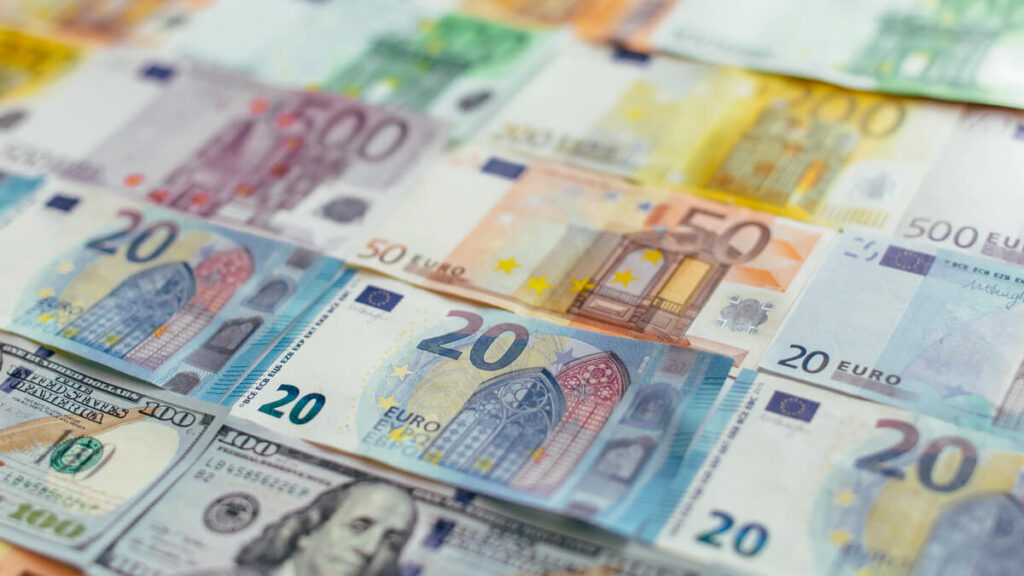
Money in general is called l’argent. Physical cash is referred to as l’argent liquide or les espèces. Banknotes or bills are called les billets, while coins are known as la monnaie or les pièces. When paying with cash, a vendor might ask if you have exact change by saying “Avez-vous de la monnaie ?” (Do you have exact change?).
Electronic payment forms include la carte bancaire (or la carte bleue), which refers to a debit or credit card. Entering your four-digit security code on a card terminal is described as saisir son code secret. If you pay by writing a check, you use un chèque, issued from your checkbook, called un chéquier.
3. Using ATMs, Transfers, and Account Operations
Managing funds through automatic teller machines and mobile banking applications involves standard transaction verbs.
An automated teller machine (ATM) is called un distributeur automatique de billets, often abbreviated simply as un distributeur or un DAB. To withdraw cash from an ATM, you use the verb phrase retirer de l’argent, and the withdrawal transaction itself is called un retrait.
Adding money to your account is called effectuer un dépôt (making a deposit) or déposer de l’argent. Transferring funds electronically between accounts or to another recipient is described as faire un virement bancaire. Setting up a recurring automatic bill payment for utilities or rent is called un prélèvement automatique.
4. Account Balances, Fees, and Credit
Understanding your financial status requires recognizing terms related to account balances, debt, and credit options.
Your monthly account statement detailing all incoming and outgoing transactions is called le relevé de compte. The total amount of money available in your account is le solde. If your account balance is positive, it is described as en créditeur or dans le vert.
If you spend more money than you have in your account, you are in an overdraft status, known as être à découvert. The maximum authorized overdraft limit allowed by your bank is l’autorisation de découvert. Bank fees or service charges assessed by the financial institution are called les frais bancaires. If you take out a financial loan to buy property or fund a project, the loan is called un prêt bancaire or un crédit, subject to an interest rate known as le taux d’intérêt.
5. Currency Exchange and Travel Money
Handling international transactions and currency conversion requires key travel banking terms.
Foreign currency in general is referred to as les devises. The physical exchange of one currency for another is called le change de devises, which you can complete at a currency exchange office, known as un bureau de change.
The current valuation ratio between two currencies is le taux de change (the exchange rate). When converting money, inquiring about transaction commissions is done by asking “Quelle est la commission pour le change ?” (What is the commission for currency exchange?). If your bank card gets blocked or eaten by an ATM while traveling abroad, you explain the situation by saying “Ma carte a été avalée par le distributeur” (My card was swallowed by the ATM).
Conclusion
Managing your money in French becomes simple once you master essential banking vocabulary. Knowing how to request un virement bancaire, locate un distributeur, monitor your solde, avoid going à découvert, and provide your RIB ensures that all your financial transactions are handled smoothly and securely. Practice these financial terms to maintain full control over your money in any French-speaking environment!
Click here to become a fluent French speaker in 3 months or less
Read Our Recent Posts

Speak French In 3 Months
SpeakFrenchFast Academy
All Rights Reserved.