Introduction
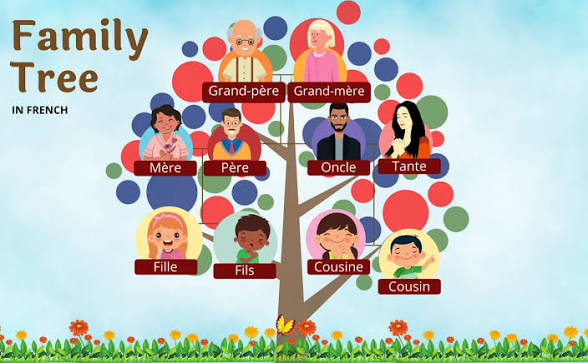
Family is a central topic of personal conversation in French-speaking cultures. Whether you are getting to know new friends, chatting with colleagues, or introducing your relatives at a social gathering, being able to talk about your family structure is fundamental. The French language provides clear, descriptive terms for immediate family, extended relatives, and blended family dynamics.
Mastering family vocabulary allows you to describe your heritage, share stories about your home life, and ask others about their loved ones with ease. This guide covers all the essential French nouns, adjectives, and conversational phrases you need to talk about your family naturally.
Click here to become a fluent French speaker in 3 months or less
1. Immediate Family Members
Your immediate family includes the people you grow up with or live with every day.
La famille This noun means the family in general. You can say, “Ma famille est très importante pour moi” (My family is very important to me).
Les parents This plural noun means parents (not just relatives). To specify “relatives” in general, French speakers use “les membres de la famille” or “les proches.”
Le père / La mère These formal nouns mean father and mother. In casual family speech, people often use “papa” (dad) and “maman” (mom).
Un frère / Une sœur These basic terms mean brother and sister. If you are an only child, you say “Je suis fils unique” (I am an only son) or “Je suis fille unique” (I am an only daughter).
Un enfant / Les enfants These words refer to a child / children.
Un fils / Une fille These nouns mean son and daughter. Note that “fille” also means girl depending on the context.
2. Extended Family Members
Talking about grandparents, aunts, uncles, and cousins helps paint a complete picture of your broader family tree.
Les grands-parents This plural noun means grandparents. Individually, they are “le grand-père” (grandfather) and “la grand-mère” (grandmother), often called “papy” and “mamie” in informal settings.
Un oncle / Une tante These words translate to uncle and aunt. Informally, children might refer to them as “tonton” and “tata.”
Un cousin / Une cousine These terms refer to a male cousin and a female cousin, respectively.
Un neveu / Une nièce These nouns mean nephew and niece.
Les petits-enfants This term refers to grandchildren, with “le petit-fils” meaning grandson and “la petite-fille” meaning granddaughter.
3. In-Laws and Blended Families
Modern family structures include step-relatives and in-laws, which follow consistent naming patterns in French.
Les beaux-parents This term translates to in-laws or step-parents. Individually, “le beau-père” can mean father-in-law or stepfather, and “la belle-mère” can mean mother-in-law or stepmother.
Un beau-frère / Une belle-sœur These terms mean brother-in-law / stepbrother and sister-in-law / stepsister.
Un demi-frère / Une demi-sœur These phrases refer specifically to a half-brother / stepbrother and a half-sister / stepsister.
Le gendre / La belle-fille “Le gendre” (or “beau-fils”) means son-in-law, while “la belle-fille” means daughter-in-law or stepdaughter.
4. Describing Family Relationships and Sizes
Using key adjectives and phrases helps you describe how close your family is and how many members it includes.
Une famille nombreuse This common phrase translates to a large family with many children.
Une famille proche / unie These descriptions mean a close family or a close-knit family.
L’aîné / Le cadet / Le benjamin These birth order terms describe siblings: “l’aîné” (the oldest), “le cadet” (the middle child), and “le benjamin” (the youngest child).
Ressembler à… This verb phrase means to look like or resemble someone. For example, “Je ressemble à ma mère” (I look like my mother).
S’entendre bien avec… This reflexive verb phrase means to get along well with someone, such as “Je m’entends très bien avec mes cousins” (I get along very well with my cousins).
5. Asking Others About Their Family
Engaging in dialogue about family requires polite, open-ended questions.
Tu as des frères et sœurs ? This friendly question means Do you have any brothers and sisters?
Vous avez des enfants ? This formal question translates to Do you have children?
Combien de personnes y a-t-il dans ta famille ? This question means How many people are in your family?
Comment va ta famille ? This simple check-in means How is your family doing?
Conclusion
Sharing information about your family in French is a warm and authentic way to build deeper personal connections. Knowing how to distinguish between “les parents” and “les proches,” identify siblings by birth order, introduce in-laws with terms like “beau-père,” and ask polite questions allows you to converse naturally about home life. Practice using these family terms, and enjoy introducing your relatives in your next French conversation!
Click here to become a fluent French speaker in 3 months or less
Read Our Recent Posts
Speak French In 3 Months
SpeakFrenchFast Academy
All Rights Reserved.