Introduction
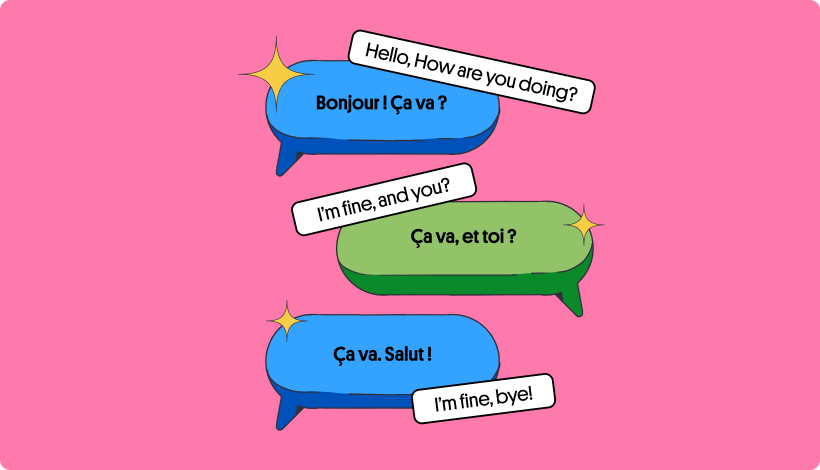
A common complaint for learners in places like Lagos or Abuja is the lack of a “French community.” It feels impossible to improve when your neighbors, colleagues, and family all communicate in English, Yoruba, or Pidgin. You feel like a lone soldier trying to maintain a skill that has no place in your immediate environment.
However, the most successful speakers are not those who live in a Francophone hub, but those who have mastered the art of “simulated interaction.” If you wait for a native speaker to appear in your living room to start practicing, you will be waiting forever. You have to create the conversation yourself.
Click here to speak fluent French in as little as 3 months time
The Power of the “Internal Dialogue”
Your brain does not necessarily distinguish between a conversation with a stranger and a focused conversation with yourself. The same linguistic pathways are fired when you produce a sentence, regardless of who is listening.
- The Strategy: Use the Big Four (être, avoir, faire, aller) to narrate your choices. When you are deciding what to eat, say it out loud. “Je vais manger du riz” (I am going to eat some rice) or “J’ai faim” (I am hungry).
- The Benefit: This removes the “performance anxiety” of a real conversation. You are building the muscle memory of the Big Four in a zero-stakes environment, so that the words are already “warm” when you finally do meet a French speaker.
Become a “Ghost” in the Conversation
If you cannot find a physical partner, you must find a digital one. This is where you stop being a passive listener and start being an active participant.
- The Technique: Watch a French interview or a YouTube vlog. Pause after the host asks a question and try to answer it yourself before the guest speaks.
- The Goal: You are practicing the “retrieval” of the language. This forces your brain to search for chunks and vocabulary under a time limit, which is exactly what happens in a real-life encounter. It turns a lonely study session into a dynamic exchange.
The Shadowing Technique: Your Invisible Coach
Since nobody is around to correct your accent or your rhythm, you need a “gold standard” to follow. The shadowing technique acts as your invisible coach, ensuring you don’t develop bad habits while practicing alone.
- The Action: Listen to a native speaker and repeat their words exactly one second after they say them. Don’t worry about the meaning initially, focus on the physical “music.”
- The Result: This ensures that your solitary practice is high-quality. You are mimicking the liaison and the natural flow of a native, meaning your mouth is learning the “correct” way to move even in total isolation.
The One Percent Rule: The “Solo Sprint”
Consistency is the engine of speed. You don’t need a group to make progress, you just need a daily appointment with yourself.
- The Habit: Use the one percent rule to engage in five minutes of “Solo Sprinting” every evening. Describe your day out loud, using only French.
- The Focus: If you don’t know a word, don’t stop to look it up. Use a Big Four verb to explain it. If you forgot the word for “market,” say “l’endroit où je vais pour faire les courses” (the place where I go to do the shopping).
- The Outcome: This trains your “circumlocution” skills, which is the ability to talk around words you don’t know. This is a hallmark of an independent speaker and is a skill you can master entirely on your own.
Conclusion
The lack of a local French community is not a barrier, it is an opportunity to build an unbreakable internal foundation. By narrating your life, interacting with digital media, and using the shadowing technique, you become your own best teacher. You are preparing your “delivery truck” in private so it is ready to move the “library” in public.
Click here to speak fluent French in as little as 3 months time
Read Our Recent Posts
Speak French In 3 Months
SpeakFrenchFast Academy
All Rights Reserved.