Introduction
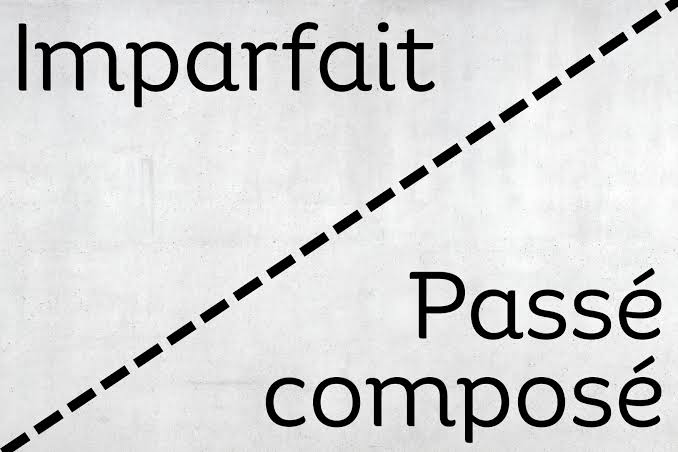
If you have studied French past tenses in a textbook, you have probably memorized the standard rule. The passé composé is for completed actions, and the imparfait is for ongoing descriptions or repeated habits. While that rule is technically true, it often falls apart the second you try to use it in a fast, real-life conversation.
When native speakers tell stories about their day, describe an unexpected problem, or chat about their weekend, they switch between these two tenses smoothly and instinctively. They are not doing grammar math in their heads; they are painting a picture. Understanding how native speakers actually use the passé composé and the imparfait together will stop you from freezing mid-sentence and help you tell stories that sound completely natural.
Click here to become a fluent French speaker in 3 months or less
1. The Movie Director Analogy: Action Versus Scenery
The easiest way to understand the real difference between these two tenses is to imagine yourself directing a movie. Every great scene needs two things: a background setting and specific events that move the plot forward.
The imparfait is your camera panning across the room to set the mood. It describes what things looked like, what the weather was doing, how people were feeling, and what was already happening before anything dramatic occurred. You use it to say Il faisait froid (It was cold) or J’étais fatigué (I was tired). The passé composé, on the other hand, is the action cut. It represents the specific events that happened one after another, pushing the story toward its ending, such as J’ai ouvert la porte (I opened the door) or Le téléphone a sonné (The phone rang).
2. The Classic Interruption Pattern
One of the most frequent combinations you will hear in everyday French conversations is an ongoing action suddenly interrupted by a single event. Native speakers use this pattern constantly when explaining why they were late, how an accident happened, or how they met someone.
In this setup, the ongoing action that was already in progress uses the imparfait, while the sudden interruption uses the passé composé. A friend explaining why they missed your call might say Je prenais ma douche quand tu as appelé (I was taking my shower when you called). The shower was the continuous background activity, and your phone call was the single event that interrupted it. Mastering this exact pairing gives you an instant template for explaining everyday situations.
3. Describing People and Emotions in the Past
Learners often stumble when talking about how they felt or what someone looked like during a past event. Because the event itself is completely over, beginners are tempted to use the passé composé for everything.
In real conversation, native speakers almost always use the imparfait to describe physical appearances, states of mind, and emotional reactions in the past. If you are telling a friend about a party you went to last night, you say La musique était géniale et tout le monde était content (The music was great and everyone was happy). Using the passé composé here sounds stiff and unnatural because feelings and atmospheres do not have a sharp starting and stopping point like kicking a ball or closing a door.
4. Habits and Routines Versus One-Time Events
When native speakers talk about their childhood, their old job, or what they used to do every summer, they rely heavily on the imparfait. Any action that repeated regularly without a specific count of how many times it happened belongs in the imparfait.
You will hear people say Quand j’habitais à Paris, je prenais le métro tous les matins (When I lived in Paris, I took the subway every morning). However, the moment you attach a specific number of times or a strict time limit to that action, native speakers switch immediately to the passé composé. If you took the subway exactly three times last week, you say La semaine dernière, j’ai pris le métro trois fois. Counting the action turns it into a completed, bounded event.
5. Verbs That Shift Meaning Depending on the Tense
A fascinating quirk of real French conversation is that a handful of common verbs actually change their practical meaning depending on whether you put them in the passé composé or the imparfait.
Take the verb savoir (to know). In the imparfait, Je savais means I already knew that fact over a period of time. In the passé composé, J’ai su means I just found out or I learned that piece of information at a specific moment. The same shift happens with pouvoir (to be able to). Je pouvais means I was able to in general, whereas J’ai pu means I succeeded in doing it on that specific occasion. Noticing these subtle shifts makes your listening comprehension much sharper.
6. How to Practice Choosing Naturally
You cannot master these two tenses by staring at grammar tables; you have to practice telling short, simple stories out loud.
At the end of each day, take two minutes to summarize one small event that happened to you. Start by setting the scene with two sentences in the imparfait, describing where you were and how you felt. Then, tell what actually happened using two or three sentences in the passé composé. For example, Il pleuvait et j’avais faim, alors je suis allé à la boulangerie et j’ai acheté un sandwich (It was raining and I was hungry, so I went to the bakery and bought a sandwich). Repeating this simple storytelling routine trains your brain to switch tenses smoothly without hesitation.
Conclusion
The difference between the passé composé and the imparfait in real conversations is all about perspective. The imparfait paints the background scenery, emotions, and old habits, while the passé composé drives the main action forward. By thinking like a movie director and practicing small daily stories, you will stop second-guessing your verb choices and start speaking about the past with effortless confidence.
Click here to become a fluent French speaker in 3 months or less
Read Our Recent Posts

Speak French In 3 Months
SpeakFrenchFast Academy
All Rights Reserved.