Introduction
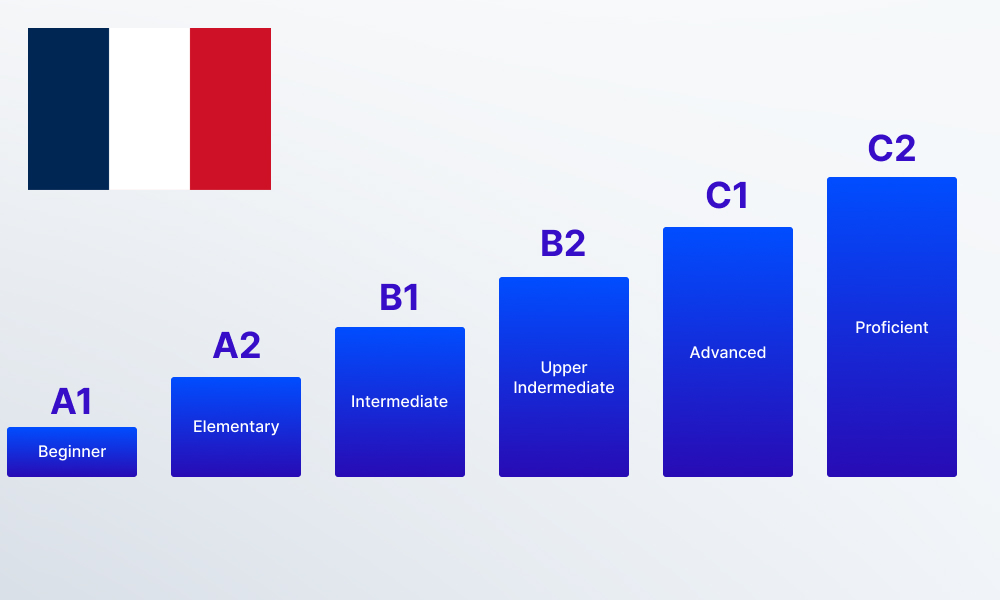
If you are currently at the stage where you can say hello and order a coffee but feel completely lost when a native speaker responds, you are likely at the A1 or A2 level. The jump to B1 is the most exciting part of the journey because B1 is the level of “independence.” At this stage, you can maintain a conversation, travel without a translator, and express your opinions on things that matter to you.
However, many learners get stuck in the beginner phase for years because they don’t have a clear path. This complete roadmap from Beginner to B1 in French is designed to give you the exact milestones you need to hit to move from basic phrases to intermediate fluency.
Click here to speak fluent French in as little as 3 months time
Phase 1: The Foundation (A1 Level)
This is where you build your skeletal structure. You cannot run until you can walk, and in French, walking means mastering the present tense and basic survival vocabulary.
The Goal: To understand and use familiar everyday expressions and very basic phrases.
Key Milestones:
- Master the Big Four Verbs: You must know être (to be), avoir (to have), aller (to go), and faire (to do) like the back of your hand.
- Pronunciation Basics: Learn the French alphabet and the specific sounds that don’t exist in English, like the French R and the nasal vowels.
- The Present Tense: Focus on regular ER, IR, and RE verbs. Don’t worry about the past or future yet.
- Numbers and Time: Be able to tell the time and count to one hundred so you can handle money and schedules.
Phase 2: The Expansion (A2 Level)
At the A2 level, you start putting your foundation to work. You move away from single words and start building complex sentences. This is often called the “waystage” level.
The Goal: To communicate in simple and routine tasks requiring a direct exchange of information.
Key Milestones:
- Conquering the Past: You must learn the Passé Composé. This is the most common way to talk about things that happened yesterday.
- Reflexive Verbs: Learn how to talk about your daily routine using verbs like se lever (to get up) and se doucher (to shower).
- Giving Directions: Practice explaining how to get from point A to point B. This forces you to use prepositions and spatial vocabulary.
- Basic Comparisons: Learn how to say something is better, bigger, or more expensive than something else.
Phase 3: The Breakthrough (Transitioning to B1)
This is where the magic happens. To move into B1, you have to stop translating in your head and start producing French more naturally. You need to bridge the gap between “knowing” and “using.”
The Goal: To handle most situations likely to arise while traveling in a French speaking area and produce simple connected text on topics which are familiar.
Key Milestones:
- The Imperfect Tense (L’imparfait): You need this to describe things in the past, like what you used to do as a child or what the weather was like.
- The Future Tense: Move beyond saying “I am going to eat” and learn how to say “I will eat” (Je mangerai).
- Relative Pronouns: Learn how to use qui and que to join sentences together so you don’t sound like a toddler.
- Expressing Opinion: You must be able to say Je pense que (I think that) or À mon avis (In my opinion) and follow it up with a reason.
The B1 Checklist: How Do You Know You Are There?
Before you claim B1 status, check if you can perform these five tasks comfortably:
| Task | Capability |
| Storytelling | Can you describe a dream, an event, or a hope for the future? |
| Problem Solving | If a hotel loses your reservation, can you explain the situation? |
| Comprehension | Can you understand the main points of a radio program on a familiar topic? |
| Writing | Can you write a simple, coherent email to a friend about a trip? |
| Nuance | Do you understand the difference between tu and vous in social context? |
Pro Tips to Accelerate Your Journey
Focus on “Island” Vocabulary
An island is a topic you know very well. If you love football, learn every French word related to football. If you are a doctor, learn medical terms. These “islands” of fluency give you confidence and allow you to have deep conversations early on.
Record Yourself
Once a week, record yourself speaking French for two minutes about your day. Listen back to it. You will notice your own mistakes and, more importantly, you will hear your progress over the months.
The Rule of Consistency
To get from Beginner to B1 in six to nine months, you need to engage with the language for at least thirty to sixty minutes every day. Immersion is not about being in France; it is about how much French you let into your ears and eyes daily.
Final Thoughts: The B1 Plateau
Many people hit a wall right at the end of A2. It feels like you aren’t getting better anymore. This is normal. It just means your brain is busy processing all the new rules. Don’t quit. If you keep reading, listening, and speaking, you will suddenly find yourself at B1 without even realizing it.
The view from the intermediate level is amazing. You can finally start watching movies without English subtitles and having real heart to heart conversations with French speakers.
Click here to speak fluent French in as little as 3 months time
Read Our Recent Posts

Speak French In 3 Months
SpeakFrenchFast Academy
All Rights Reserved.